
Berlin Bandur Fest
Project
Active 9 hours, 53 minutes ago
Group Leadership
- Project Initiators
-
-

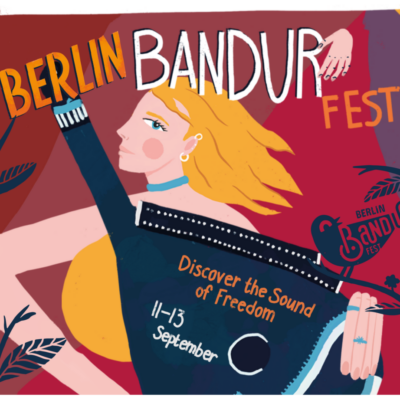
From 11 to 13 September 2026, Berlin hosted Berlin Bandur Fest, a three-day festival bringing together bandura artists and researchers from Ukraine and around the world. The programme included concerts, panel discussions, an academic conference, lectures, and community networking, from Ukrainian heritage repertoire to experimental jam sessions between bandura players, DJs, and world music artists. The festival introduced the sound of the bandura to wider Berlin audiences, built bridges with the European traditional music community, and highlighted the importance of supporting Ukraine during wartime.
The bandura is a traditional Ukrainian stringed instrument with a history dating back to the 16th century. Once carried by travelling musicians who spread stories and news across the land, and a symbol of Ukrainian identity that endured repression, it remains a living voice of cultural resilience today, spanning both traditional and contemporary music.
The line-up featured BanduraGirl (Anastasiya Voytyuk), Julian Kytasty (USA), Yaroslav Dzhus, who reached the Eurovision 2026 top 10 with Leleka, kobzar and veteran Andriy Seletsky, performing scholar Margareta Storonianska, and Diana Buynovska, who creates music in the frontline city of Dnipro.
Highlights included the concert “Strings Across Borders”, which brought the bandura into dialogue with related string traditions such as the Irish harp, Iranian tar and the guzheng. The academic conference “Bandura Beyond Frontiers: Tradition, Transmission, and Cultural Diplomacy” on 11 September gathered scholars from Ukraine, Europe, the United States, and Canada, and was open to everyone, including online. Two panel discussions addressed the changing bond between those who stayed in Ukraine and those who left, and how war and conflict shape an artist’s voice.
The festival was organised by Anastasiya Voytyuk, founder of Lviv Bandur Fest, and Khrystyna Petrynka, organiser of the Berlin edition. Their mission was to present the bandura as a relevant, experimental, and living instrument of modern music, and to invite audiences to meet Ukraine through music.
Berlin Bandur Fest
Project initiator

Project members
Viewing 1 member
Viewing 1 member
Membership List
Project info
From 11 to 13 September 2026, Berlin hosted Berlin Bandur Fest, a three-day festival bringing together bandura artists and researchers from Ukraine and around the world. The programme included concerts, panel discussions, an academic conference, lectures, and community networking, from Ukrainian heritage repertoire to experimental jam sessions between bandura players, DJs, and world music artists. The festival introduced the sound of the bandura to wider Berlin audiences, built bridges with the European traditional music community, and highlighted the importance of supporting Ukraine during wartime.
The bandura is a traditional Ukrainian stringed instrument with a history dating back to the 16th century. Once carried by travelling musicians who spread stories and news across the land, and a symbol of Ukrainian identity that endured repression, it remains a living voice of cultural resilience today, spanning both traditional and contemporary music.
The line-up featured BanduraGirl (Anastasiya Voytyuk), Julian Kytasty (USA), Yaroslav Dzhus, who reached the Eurovision 2026 top 10 with Leleka, kobzar and veteran Andriy Seletsky, performing scholar Margareta Storonianska, and Diana Buynovska, who creates music in the frontline city of Dnipro.
Highlights included the concert “Strings Across Borders”, which brought the bandura into dialogue with related string traditions such as the Irish harp, Iranian tar and the guzheng. The academic conference “Bandura Beyond Frontiers: Tradition, Transmission, and Cultural Diplomacy” on 11 September gathered scholars from Ukraine, Europe, the United States, and Canada, and was open to everyone, including online. Two panel discussions addressed the changing bond between those who stayed in Ukraine and those who left, and how war and conflict shape an artist’s voice.
The festival was organised by Anastasiya Voytyuk, founder of Lviv Bandur Fest, and Khrystyna Petrynka, organiser of the Berlin edition. Their mission was to present the bandura as a relevant, experimental, and living instrument of modern music, and to invite audiences to meet Ukraine through music.
